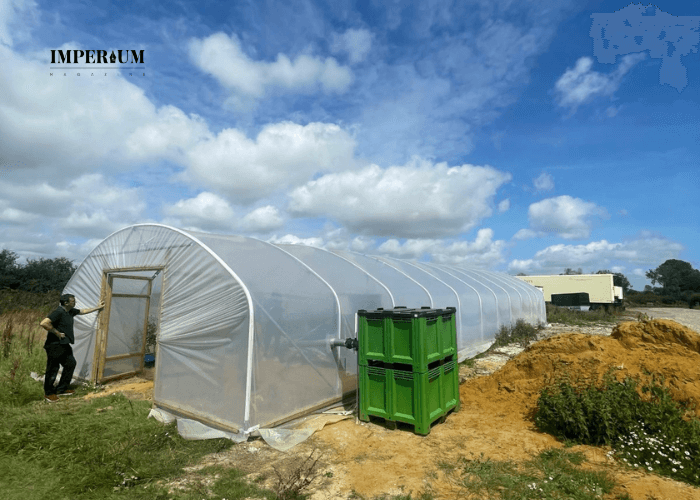
UK startup EcoNomad Solutions secures €466k to turn livestock waste into renewable energy for small farms
Harpenden-based AgriTech startup EcoNomad Solutions has secured €466k (£400k) in new funding to help small livestock farms reduce methane emissions, lower energy and fertiliser costs, and turn organic waste into renewable energy.
The funding includes €268k (£230k) from the British Design Fund (BDF), along with an Innovate UK Investor Partnership grant and additional backing from existing investor Beeches Group.
Dr. Ilan Adler, founder and CEO of EcoNomad Solutions, says: “Small farms are under increasing pressure, yet they’re often excluded from the renewable energy solutions available to larger operators. Our mission is to change that. The BioNomad is designed to make waste‑to‑energy accessible, affordable and practical for even the smallest farms, helping them reduce emissions, lower costs and build resilience. The support from BDF, Innovate UK and our existing investors enables us to progress product development and scale our operations across the UK and Europe.”
Today’s funding comes as investment continues to grow in European technologies focused on reducing agriculture’s environmental impact while helping farmers improve their finances.
This year, EU-Startups has reported several funding rounds in the sector, including €1.7 million for Sweden’s Volta Greentech to reduce methane emissions from cattle, €1.25 million for Amsterdam-based Proba to cut fertiliser-related emissions, €3.2 million for Berlin’s Seqana to improve soil-health monitoring, €8 million for French regenerative agriculture startup UBEES, and more than €1.17 million for UK agricultural robotics company Versatile RobotX.
Including EcoNomad’s latest funding, these rounds represent more than €15 million in disclosed investment. The wider sector has also secured major funding, including a €120 million financing facility for Lithuania-based InSoil to support regenerative agriculture.
Versatile RobotX is a particularly relevant UK comparison for EcoNomad, as its funding was also backed by the British Design Fund and Innovate UK.
Damon Bonser, CEO of the British Design Fund, adds: “EcoNomad Solutions is addressing a major environmental and economic challenge with a solution that is both innovative and highly scalable. Their approach to decentralised anaerobic digestion has the potential to deliver meaningful impact for small farms globally. We’re pleased to support Ilan and the team as they take this next step.”
Founded in 2018, EcoNomad Solutions aims to reduce the environmental impact of small livestock farms by turning animal waste into energy locally and on a smaller scale.
Its flagship product, BioNomad, captures methane that would otherwise be released into the atmosphere and converts organic waste into biogas for heating, cooking or electricity. It also produces biofertiliser, helping farmers reduce their reliance on chemical fertilisers.
According to the company, a typical small farm with around 50 cows could save several thousand pounds each year on energy and fertiliser costs, depending on how the farm operates and uses the system.
The idea for BioNomad originated in Latin America, where founder Dr. Adler saw how simple, decentralised waste-to-energy systems could support rural communities. He noticed that many waste-management challenges were similar in both developed and developing markets. This inspired him to develop a system designed specifically for colder climates, smaller farms and the regulatory requirements of the UK and Europe.
EcoNomad says small and medium-sized livestock farms face three major challenges: rising energy and fertiliser costs, stricter rules around slurry and waste management, and growing pressure to reduce methane emissions. Agriculture is one of the largest sources of human-caused methane emissions worldwide.
However, many existing anaerobic digestion systems are designed for large farms and can be too expensive, complex or large for smaller operators. EcoNomad aims to address this gap with a smaller and more accessible solution.
The company’s technology is already installed on more than 10 farms across the UK, with additional systems deployed in Africa. It has also completed trials involving insect farms, food waste and renewable energy systems that combine biogas, solar and wind power to charge electric vehicle batteries.
EcoNomad mainly targets dairy, beef, pig and poultry farms, as well as off-grid and rural communities across the UK, Europe and other markets.
Over the coming years, the company plans to develop BioNomad into a fully automated, plug-and-play system that is easier for farmers to operate. It also aims to expand commercial deployment across the UK before entering European and emerging markets, with the long-term goal of making on-farm waste-to-energy technology more accessible to smaller farms.