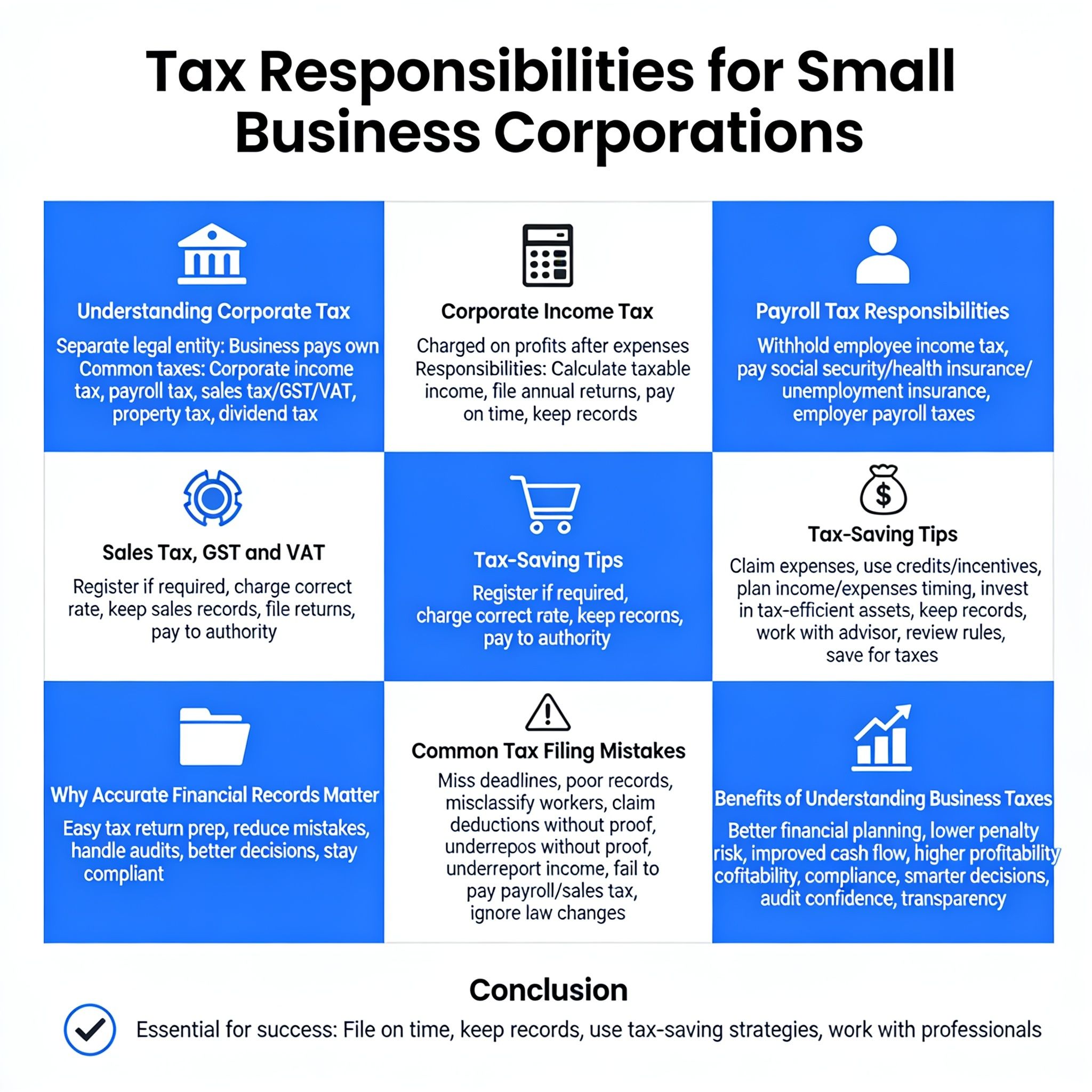
Tax Responsibilities for Small Business Corporations
Taxes are an important part of running a small business corporation. Every business must pay taxes and follow government tax rules. Understanding your tax responsibilities helps you avoid penalties, manage your finances better and support long-term business growth.
The taxes a business pays depend on its legal structure, location, income, number of employees and the type of business it operates. Common business taxes include corporate income tax, payroll tax, sales tax, Goods and Services Tax (GST), Value-Added Tax (VAT), property tax and other industry-specific taxes.
Since tax laws can change over time, business owners should stay informed and make sure all tax returns and payments are completed correctly and on time.
Understanding Corporate Tax
A small business corporation is a separate legal entity from its owners. This means the business is responsible for paying its own taxes instead of the owners paying them personally.
Depending on local tax laws, a corporation may have to pay taxes on the profits it earns.
Common business taxes include:
Corporate income tax
Payroll taxes
Sales tax, GST or VAT
Property tax
Dividend tax (in some countries)
Understanding these taxes helps businesses stay compliant and avoid legal or financial problems.
Corporate Income Tax
Corporate income tax is charged on the profits a business earns after deducting eligible business expenses.
To manage corporate income tax properly, businesses should:
Calculate taxable income correctly.
File annual tax returns on time.
Pay taxes before the deadline.
Keep accurate financial records.
Proper tax planning helps reduce mistakes and keeps the business compliant.
Payroll Tax Responsibilities
If your business has employees, you must manage payroll taxes. These taxes are deducted from employee salaries or paid by the employer.
Common payroll tax responsibilities include:
Withholding employee income tax
Paying social security contributions
Making health insurance contributions (where required)
Paying unemployment insurance
Paying employer payroll taxes
Managing payroll correctly helps avoid penalties and legal issues.
Sales Tax, GST and VAT
Many businesses must collect sales tax, GST or VAT from customers and pay it to the government.
To manage these taxes properly, businesses should:
Register for tax if required.
Charge the correct tax rate.
Keep records of all taxable sales.
File tax returns on time.
Pay collected taxes to the tax authority.
Good record-keeping makes this process much easier.
Tax-Saving Tips for Small Businesses
There are several legal ways to reduce your business tax burden.
Some useful tax-saving strategies include:
Claim all eligible business expenses.
Use available tax credits and incentives.
Plan the timing of income and expenses.
Invest in tax-efficient assets.
Keep organised financial records.
Work with a qualified tax advisor.
Review tax rules regularly.
Save money throughout the year for future tax payments.
Good tax planning can improve cash flow and reduce tax costs.
Why Accurate Financial Records Matter
Keeping accurate financial records is essential for managing business taxes.
Good record-keeping helps you:
Prepare tax returns easily.
Reduce filing mistakes.
Handle tax audits more confidently.
Make better business decisions.
Stay compliant with tax laws.
Organised records save both time and money.
Common Tax Filing Mistakes
Many businesses make simple tax mistakes that can lead to penalties.
Common mistakes include:
Missing tax filing deadlines
Keeping poor financial records
Misclassifying employees and contractors
Claiming deductions without proper proof
Underreporting business income
Failing to pay payroll or sales taxes
Ignoring changes in tax laws
Avoiding these mistakes helps protect your business.
Benefits of Understanding Business Taxes
Knowing your tax responsibilities provides many advantages.
Benefits include:
Better financial planning
Lower risk of penalties
Improved cash flow
Higher profitability through legal tax savings
Better compliance with tax laws
Smarter business decisions
Greater confidence during tax audits
Improved financial transparency
Good tax management supports long-term business success.
Conclusion
Understanding the tax implications of a small business corporation is essential for running a successful business. From paying corporate income tax and managing payroll taxes to collecting GST or VAT and keeping accurate financial records, every tax responsibility is important. By filing tax returns on time, maintaining organised records and using legal tax-saving strategies, businesses can reduce risks, improve cash flow and stay compliant with government regulations. When needed, working with a qualified tax professional can also help businesses manage their taxes more effectively and focus on long-term growth.